Pharma · API · chemical
One batch. Three borders. One signature at the end.
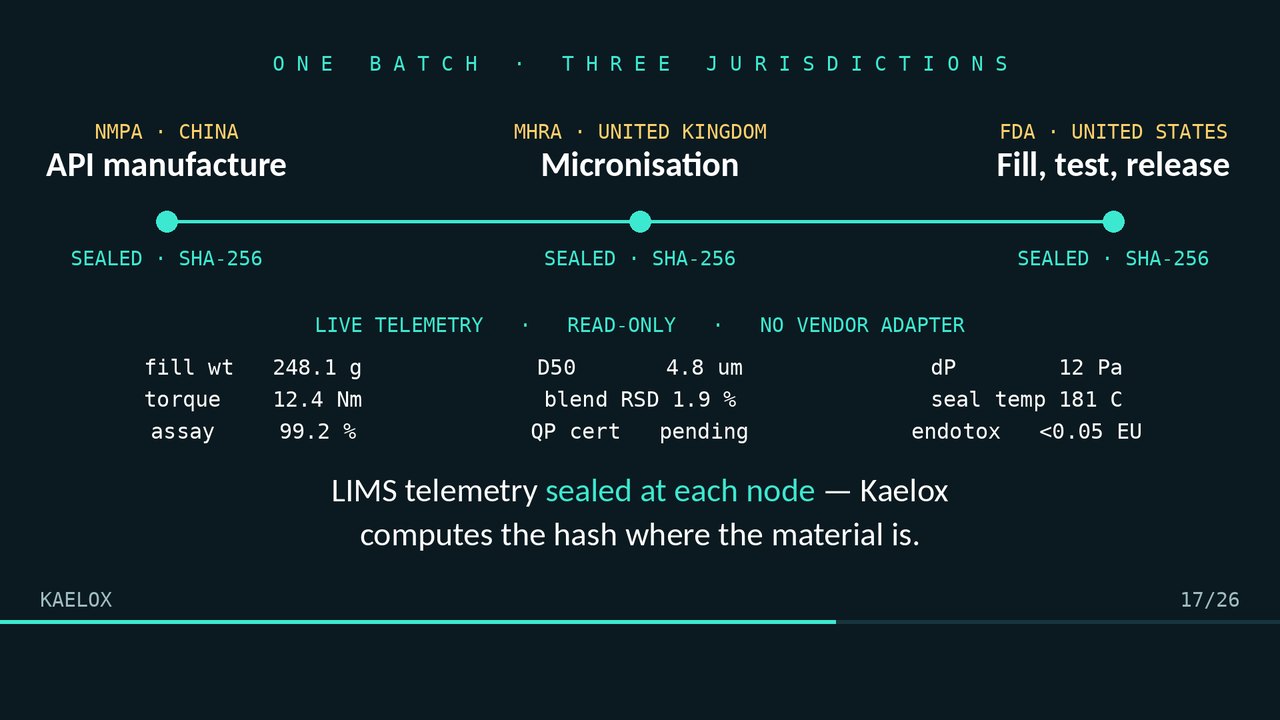
An active ingredient made in China, micronised in the United Kingdom, filled and released in the United States. Three agencies. Three quality systems that were never built to speak to each other.
What actually goes wrong
It is almost never the chemistry.
Data integrity is cited in the majority of FDA warning letters in this sector. A failing result removed before anyone downstream saw it. A certificate reissued by an intermediary. An audit trail switched off.
So the receiving site inherits a conclusion, reached somewhere else, under conditions they never got to evaluate. The Qualified Person signs for chemistry they did not witness.
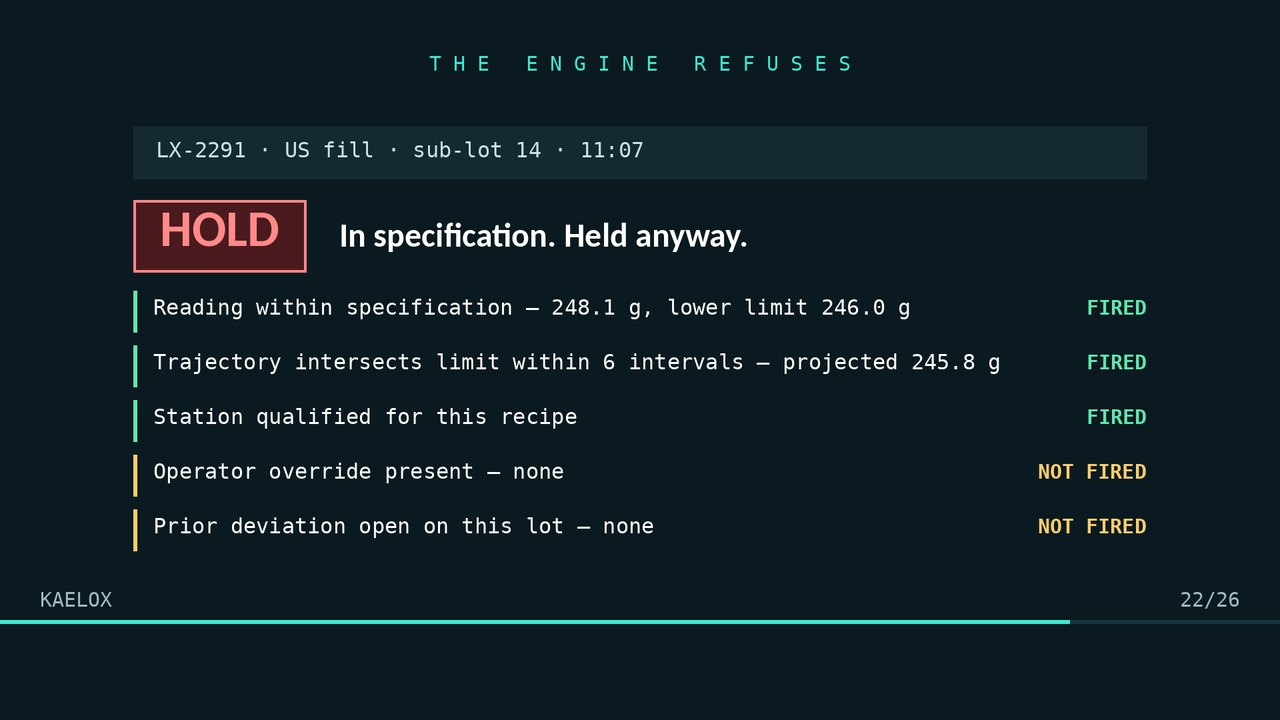
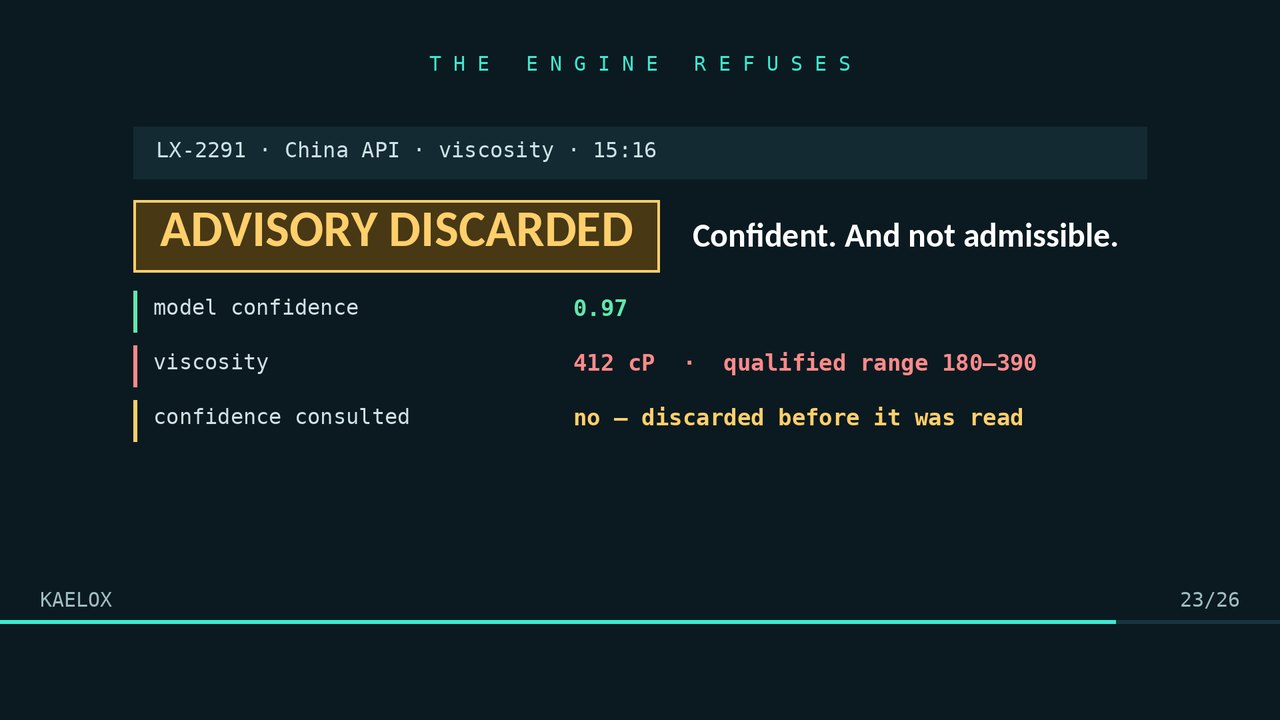
What the engine refused
Custody, and who decides
Kaelox does not hold the batch.
At each node it seals the LIMS telemetry and computes a SHA-256 hash, which goes to the receiving party before the material ships. The decision is theirs, and the law requires it to be. What changes is that they decide with evidence instead of with a certificate.
If you have already had that observation
Your problem is different, and worse.
Fifteen business days to respond. An independent third party to commission. A retrospective review of every batch still inside its expiry. What the finding actually took from you is this: nothing you say about your own records counts any more.
Kaelox cannot repair the past and does not pretend to. From the day it is installed, every record is sealed at the moment it is made, and an investigator can verify that themselves — without trusting your systems and without trusting you. That is a control you can put in a corrective action plan instead of a promise.