Medical device · SaMD
Nobody signs for the four hundred thousandth unit.
For a medicine, one person signs for one batch. For a device made at volume there is no equivalent moment — and every unit still carries a file that has to answer a question years later, asked by an investigator who was never there.
Two record-keeping cultures, one company
Kept to improve
In-line metrology, defect density, yield by run and by site. Dense, continuous, multivariate — read constantly, by people who were there, to make the next run better.
Kept to prove
Device history record, acceptance activities, UDI linkage. Structured, retained, read once — years later, by someone who was not there.
Almost nobody sits in both. The gap between them is where the trouble lives.
The failure nothing alarms on
Every reading inside specification. Nothing alarms.
Deposition thickness drifts from 486.0 to 517.0 nm across eight sub-lots, against a specification of 480 ± 40. Every unit passes final test. Capability has collapsed to 0.476 against a floor of 1.33.
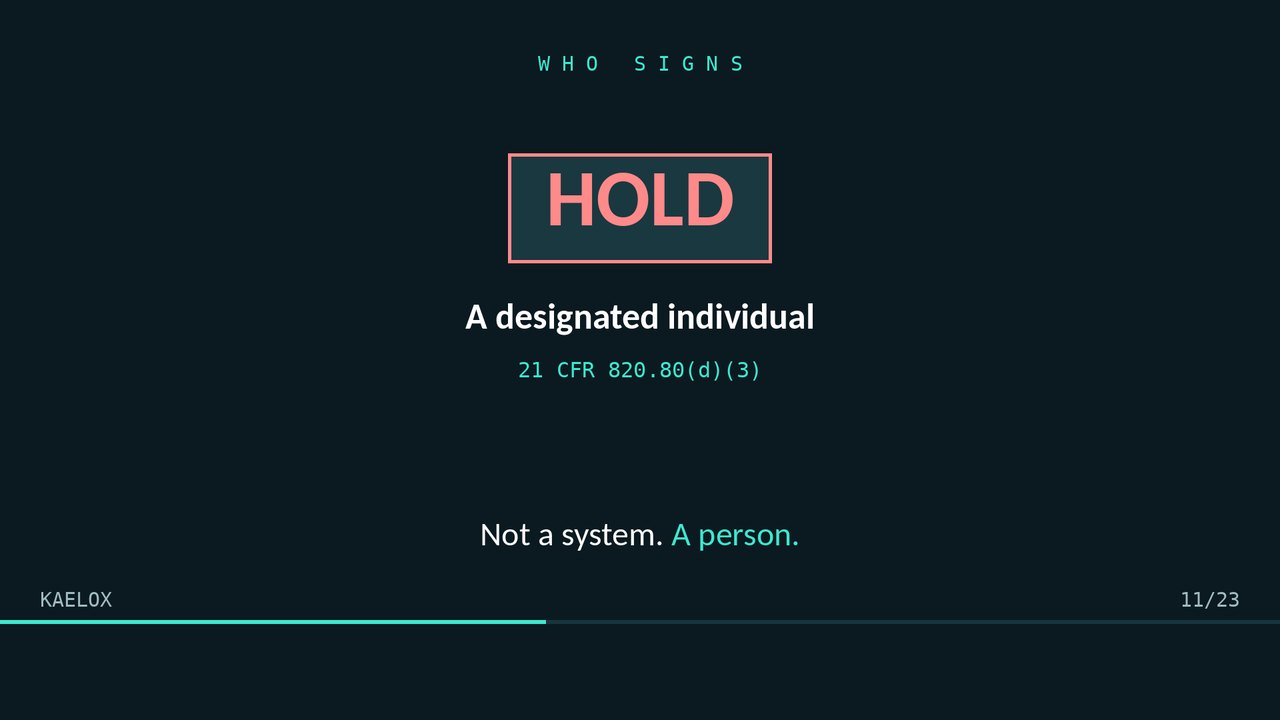
Sensitivity alone projects to 0.873 — still inside specification. Only the upstream fabrication parameter exits. Reading fab data and quality data together is the only thing that catches this.
The obligations do not stop at your gate
The same update. Two answers.
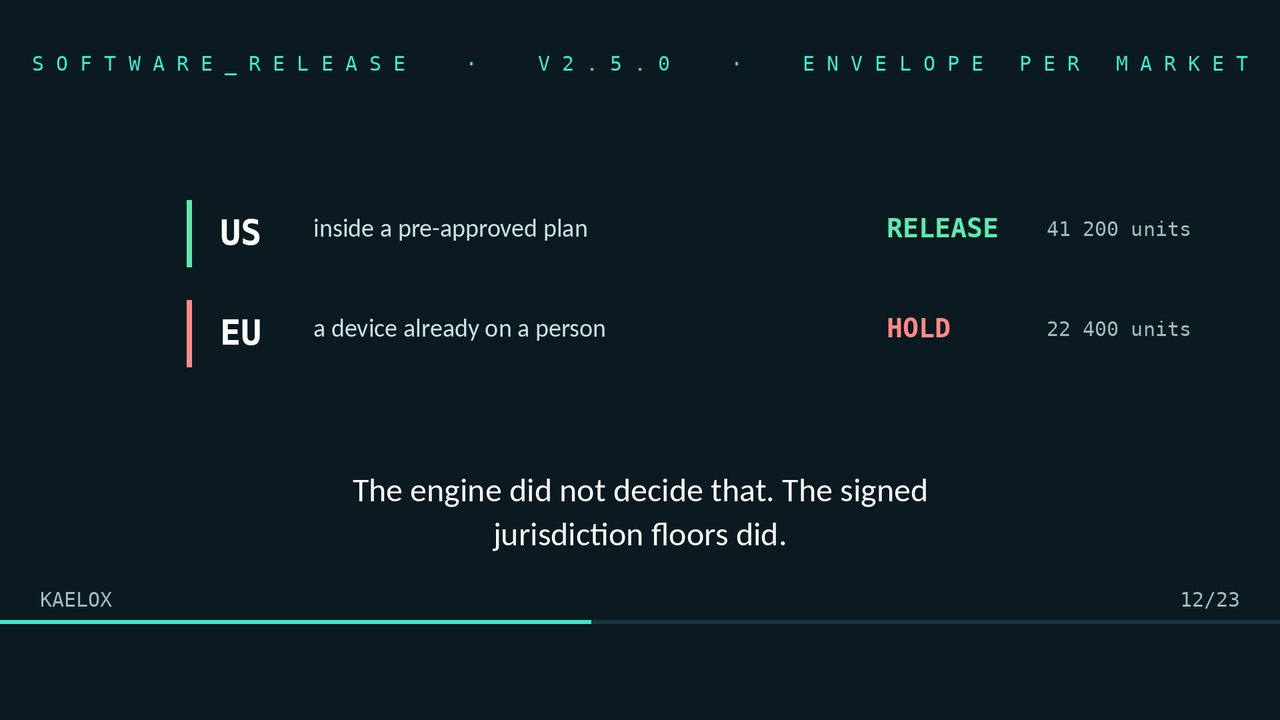
Three weeks after release, a software update goes out over the air. In the United States it sits inside a pre-approved change control plan. In Europe it is a change to a device already placed on the market, already on a person.
Eighteen months later
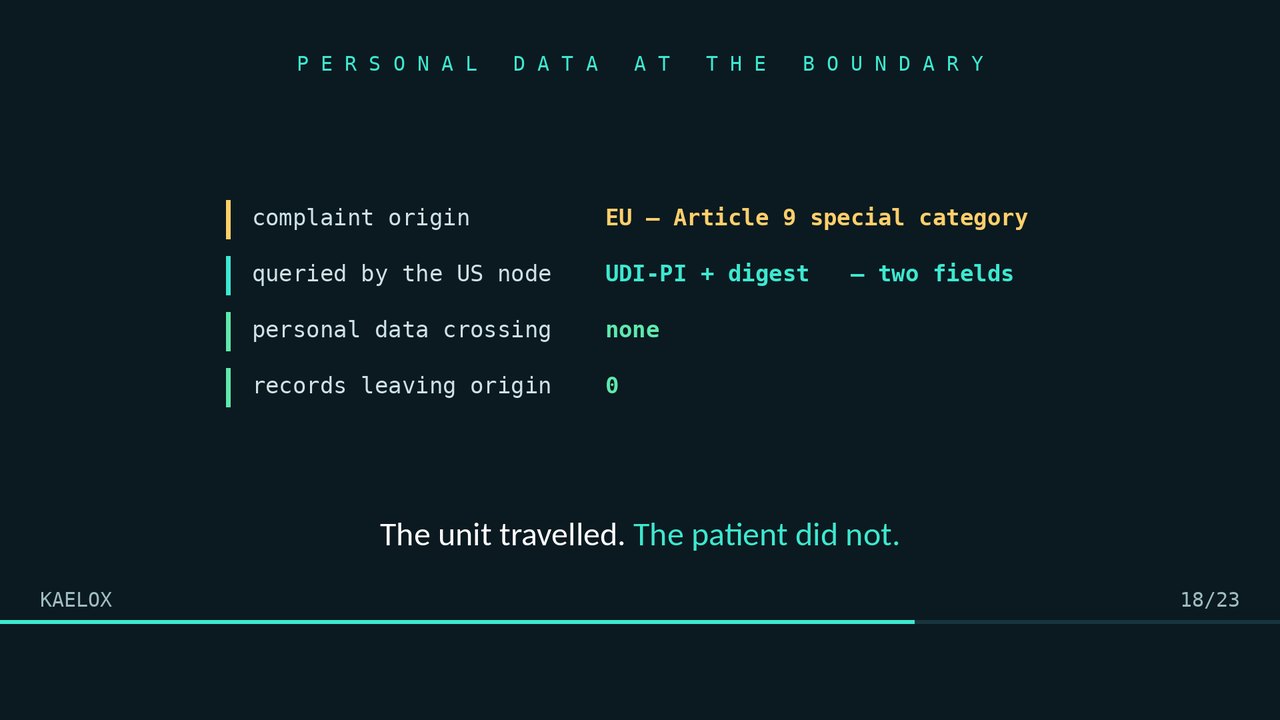
The unit travelled. The patient did not.
A complaint arrives from Germany. Which process window made this unit, which software version was on it, who authorised its release. Four questions, five systems, one traversal — and the personal data never moves.